

The seaside town of Weston-super-Mare is best known for its long sandy beach and summer day-trippers, but it’s also home to one of the industry’s largest producers of water baths for commercial kitchens. FEJ slapped on some sun cream (it wasn’t needed!) and headed to Clifton Food Range to learn why sous vide is coming of age…
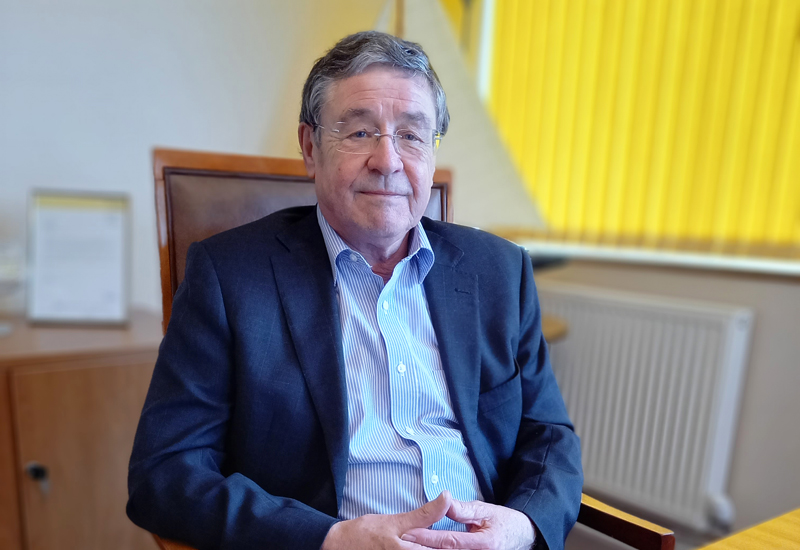
Sous vide may feel like a method that is deeply entrenched in commercial kitchens across Britain, but it hasn’t always been that way. Just ask Melvin Dickson, managing director of Nickel-Electro, parent company of Clifton Food Range — the brand of equipment with the distinctive orange handles.
Nickel-Electro has a long and rich history of manufacturing water baths for the laboratory sector — it recently celebrated 80 years since the business was incorporated — but in the mid-2000s it discovered that a group of prominent chefs had also begun using its kit to cook sous vide.
One chef, who had just written a book at the time, cited its water baths as a “must-have” for every kitchen in a page highlighting equipment to watch.
That struck a chord with Dickson, who realised the company could be onto something significant, and he quickly decided to look for a vacuum packing company it could work with. He approached Swindon-based Multivac, a company he regarded as the “Rolls-Royce” of its field and who were located not too far from its own base in Weston-super-Mare.
“They weren’t quite clear what we were talking about, but they took a chance with us and in 2006 we launched the whole range with Multivac at the Restaurant Show,” reminisces Dickson. “After that, David Hadley [Multivac’s product manager] and I would drive around visiting prospective customers because chefs weren’t really clear about it, distributors didn’t know about it and there was no demand.
“We would do our own little demonstration of salmon, chicken and eggs, and let them taste it. Then we’d leave a water bath and a vac packing machine with them for a month. In two years we only one had one customer give it back — everybody else who tried it bought it. The chef community is very small — if you get things wrong everybody hears about it, but if you get it right, like a sous vide bath, they’ll all ring up their friends. I remember being with Sat Bains and he rang up Claude Bosi and said, ‘you’ve got to have one of these’. That’s how it starts to move.”
Dickson and Hadley clocked up the miles as they travelled around the country trying to get chefs interested in this new way of cooking. Their double act was fruitful: whenever they secured an appointment, they knew it almost certainly meant another sale.
“It was a hard slog but good fun, and between 2006 and 2009 the business started to ramp up really fast,” says Dickson. With independent restaurants and small chef-owned sites clamouring to get water baths into their kitchens, the company was rapidly beginning to develop a business that complemented its laboratory heritage. The only notable difference was the route to market. Laboratory water baths were sold through distribution, but the food market was nowhere near developed enough to replicate that model.
“Nobody really knew anything about it so we had to do our direct selling to create the market,” says Dickson. “At the very beginning, chefs were just learning about it. It was big in the States, but there was no real demand or pull-through or requests from distributors here.”
It didn’t take long for that to change, however. As the landscape evolved, and sous vide gained more of a mainstream following, Clifton was able to build the volume of indirect business that it coveted from the start. One of the most significant strategic steps it took was appointing Signature FSE to develop its presence in the distributor sector.
“Signature is well-known and has got many years of experience in the market, so it was ideal when [managing director] Paula Sherlock agreed to take on the range and act as our selling agent,” he says.
While sous vide perhaps had a reputation as a tool that only suited Michelin star restaurants and high-end eateries at one stage, the reality is that operators from all areas of the market have found ways to use the method to their advantage. These days you’re just as likely to see those unmistakable orange handles in supermarket development kitchens, food manufacturing sites, sports stadia, gastropubs and steakhouses.
“In two years we only one had one customer give a unit back — everybody else who tried it bought it”
“The benefits that can be derived from it in terms of portion control, reduced wastage and increased yield are huge,” says Dickson. “When you put something into an oven, it shrinks maybe 20%. If you do it sous vide, it’s maybe 3%. So you get more yield or you buy in less meat to start with, either way you’re reducing cost.
“I remember we did an event up at Gleneagles many years ago and Colin Bussey was the executive chef there at the time. He put in a sous vide system and it was him that said he no longer buys a 230 gram steak which shrinks to 180 grams in a pan when he cooks it. He buys in at 180 grams, cooks it sous vide and it doesn’t shrink. He put induction in as well and said he was saving 80% on his revenue and 40% on his energy cost. I always quote that as an example because what he was able to achieve was so striking.”
The pandemic has exposed Clifton to a new generation of foodservice customers, something that Dickson could never have foreseen when the UK hospitality industry was ordered to close in March 2020. That was a worrying time and had it not been for two of its largest laboratory customers classifying it as a critical supplier, things could have turned out very differently. But after coming through that period, it discovered that the concept of sous vide had actually gained even greater relevance in what was now a delivery-focused society.
“It all changed because operators changed what they were doing — you had the emergence of dark kitchens, central product kitchens and home delivery. Chefs have looked at other ways to develop their products for customers that aren’t necessarily seated in their restaurant but still want the same high standard for home. I think, possibly, people have been quite surprised by how well they have done out of it.
“We’ve seen quite a few of our larger volume baths being sold into central production kitchens and dark kitchens for the fast food market. Sales of those baths have gone up quite a bit over the last six months. Sous vide will give you a consistent product every time because you are using the same ingredients, same weights, cooked at the same temperature, for the same time.”
One of the smartest moves Clifton made was introducing a double chamber bath that was originally designed for the laboratory sector.
“It means that chefs can cook fish, for example, directly for service at a lower temperature than the other chamber where they might be regenerating something that has already been cooked and chilled.
“That’s where the double baths come into their own because you regenerate something at a similar temperature — or slightly lower — than you actually cooked it at. Fish has got a short shelf life when it is fresh, shortened shelf life when it is cooked, and a short cook time, so it makes sense to cook it immediately for service. It was a good decision to move that product across.”
“We’ve seen quite a few of our larger volume baths being sold into central production kitchens and dark kitchens for the fast food market”
Around 25% of Nickel-Electro’s turnover comes from food baths, although on some days it can account for 90% of its daily order intake given the nature of sales cycles. The firm has a healthy export business that has seen its products shipped to all corners of the globe over the years and Dickson places huge currency on its status as a British manufacturer.
The competitive landscape has changed in recent years but he is content with where it has left the business placed.
“I think we are the only manufacturer in the UK now, because all the other products that I see in the market have come in from China, or Italy or Spain. In a way, the shipping difficulties and the pricing issues that importers are having is working in our favour. We are seeing a lot of distributors buying our product now that historically would have bought someone else’s. Our focus is just on keeping our profile up.”
As a manufacturing business, the rising cost of components and economic pressure facing global supply chains are far from ideal. It has endeavoured to remain on the front foot despite the challenges.
“We took the decision, probably in October time last year, to buy forward a lot of a particular component, which meant we tied up a lot of cash but it means we avoided larger price increases which have now come in and it meant we had stocks of the components that we want. We had already begun that process because of Brexit and then we topped it up again when Covid came along and prices started to go up.”
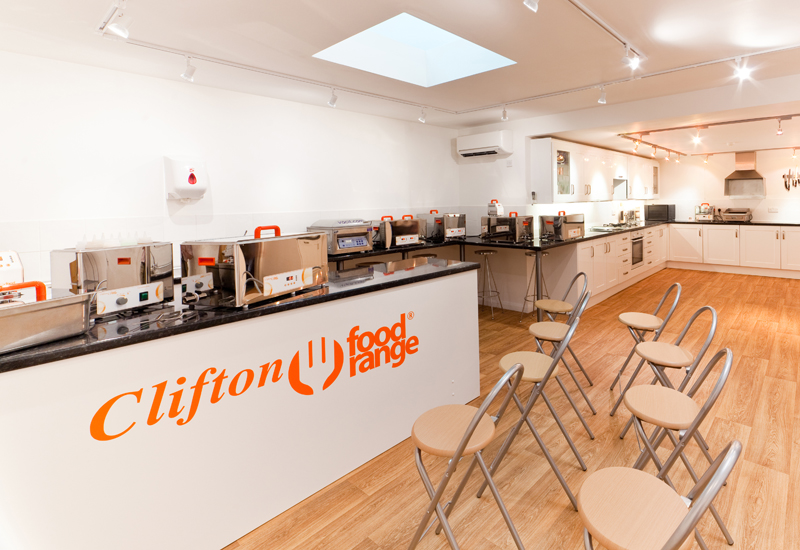
In addition to this, the business continues to make investments in infrastructure and product development where it makes sense. This has included the purchase of 3D printers to create new parts and product prototypes, and the opening of an on-site development kitchen where customers can trial its equipment and test their menus.
Clifton Food Range’s success is predicated on getting its equipment in front of chefs to the point where they realise they can’t be without it, but Dickson recognises that its future prospects will hinge just as much on convincing other stakeholders.
“You need to talk to the people that are controlling the money about what they can save save and the return on investment,” he acknowledges. “We used to talk to the chef about the health benefits, the taste, the texture — now they’ll say to me ‘we know all that, you’ve got to tell the F&B manager about increased yield, the reduction in gas energy usage, the reduction in wastage and how it can assist with labour challenges. We have always pushed the financial benefits of it but we are putting even more emphasis on it now, particularly with the way energy costs have gone up.”
As those early roadtrips taught him, if the proposition is right, the customers will always recognise the value.
5 facts about Clifton Food Range
1. Clifton Food Range is part of Nickel-Electro Ltd, which also manufactures water baths for laboratory use. The firm was incorporated as a limited company in 1941, but its roots can be traced back to 1935 when the business first started.
2. Now in its third generation of family ownership, the company prides itself on being a strongly established, independent British manufacturer.
3. Originally based in Birmingham, Nickel-Electro relocated to its current location in Weston-super-Mare in 1962 along with several other companies with origins in the Midlands.
4. The Clifton brand takes its name from the Clifton Suspension Bridge in Bristol, which was designed and built by the famous Victorian engineer Isambard Kingdom Brunel and is recognised for its engineering excellence.
5. Clifton works closely in the UK with its agency partner Signature FSE, which supports leading brands of premium foodservice equipment for cooking, preparation, display and serving.
